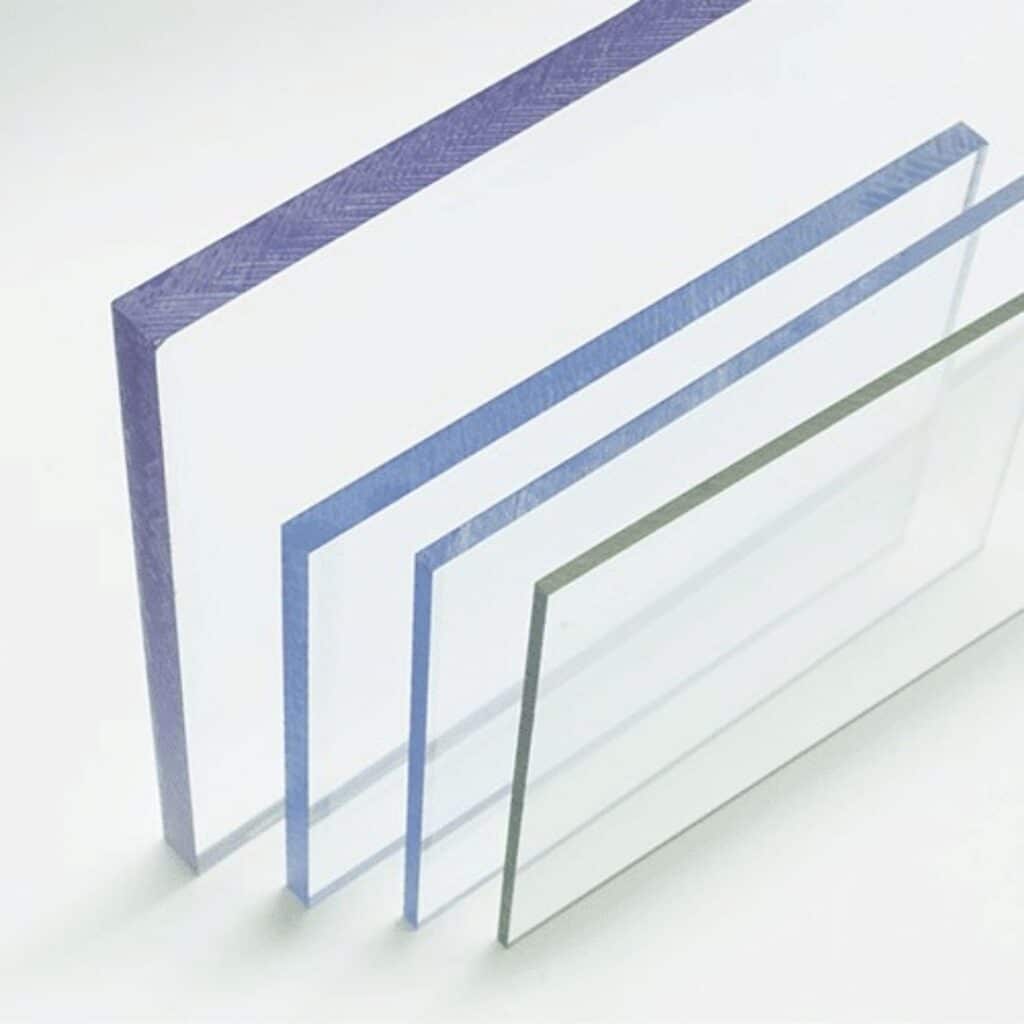
A transparent finish is often preferred when the objective is to maintain visibility while introducing a protective barrier.
A transparent polycarbonate sheet in Goa can be considered for skylights, display covers, partitions, protective panels, and other applications where clear visibility is important.
However, transparency alone should not determine the purchase decision.
Optical Clarity
Check whether the sheet provides the level of visual clarity required for the application. Display structures and transparent partitions may require different optical characteristics from general protective covers.
Surface Quality
Examine the sheet for visible scratches, surface imperfections, and other defects before installation.
Proper handling and protective packaging can help reduce surface damage during transportation and storage.
Thickness and Rigidity
The sheet must have sufficient rigidity for the intended installation. Larger panels may require additional support depending on their dimensions and mounting arrangement.
Protective Film
Check whether the product comes with a protective film and follow the recommended handling instructions during fabrication and installation.
Removing protective film at the appropriate stage can help reduce accidental surface scratches.
Polycarbonate may be a practical option when lower weight and impact resistance are important considerations.
Glass may remain preferable where specific optical, scratch-resistance, fire-performance, or architectural requirements demand it.
The decision should be based on the complete project specification rather than assuming one material is suitable for every application.
Before finalising an order, buyers should evaluate the application and technical requirements.
A structured selection process can help avoid unnecessary expenses and material-related problems.
Step 1: Identify the Application
Determine whether the sheet is required for roofing, a partition, a display cover, a protective enclosure, or another purpose.
This establishes the basic performance requirements.
Step 2: Decide the Required Thickness
Select thickness according to the panel dimensions, support structure, expected loads, and intended usage.
Do not choose thickness based only on price.
Step 3: Confirm the Colour and Transparency
Transparent sheets are suitable for projects where visibility and natural light are important. Other colour options may be considered for specific design requirements.
Step 4: Check UV Protection
For outdoor applications, confirm the UV-protection specifications before purchasing.
This is particularly relevant for sheets exposed to direct sunlight.
Step 5: Calculate the Required Quantity
Measure the installation area and prepare a cutting layout.
Remember that the specified minimum order quantity is 20 sheets. Confirm whether this quantity suits your project requirements.
Step 6: Compare Complete Quotations
Ask suppliers to provide details about thickness, dimensions, product grade, price, taxes, transportation, and availability.
Comparing quotations on the basis of identical specifications makes the buying decision more meaningful.
Anupam Plastics offers the PC Lite polycarbonate sheet range for buyers exploring different material specifications and thickness options. With a starting price of ₹1,100 per sheet onwards and a minimum order quantity of 20 sheets, the available range can be considered for various project requirements.
If you are comparing polycarbonate sheets wholesale suppliers in Goa, you can enquire about available thicknesses, colours, dimensions, and pricing.
Contact Anupam Plastics to discuss your requirements and find a suitable polycarbonate sheet for your upcoming project.